A character name generator with real names and real meanings
Real names from real cultures, with what they mean and where they come from. Pair a given name with a family name, or describe your character and get ten built to fit.
A character name generator suggests names for people in fiction. This one lists real Japanese names, Arabic names and Western names with their actual meanings, split into given names and family names so you can pair them. The lists are free with no account. Ten names built from your own description use one of the 15 free credits a new account gets.
Character name generator
Character names
- HollisEnglish, dweller by holly; unisex
- Aoihollyhock, blue; unisex
- Bashirbringer of good news; masculine
- BarnabyAramaic; English, faintly ridiculous
- Rikuland; masculine
- Sahardawn; feminine
- Juniperbotanical; modern, reads American
- Tanakamiddle of the rice field; very common
- Haddadblacksmith; occupational, widespread
- DelacroixFrench, of the cross
- Fujimotobase of the wisteria
- Al-Masrithe Egyptian; a nisba, names origin
- KowalskiPolish, smith; the Polish Smith
- Moritaforest field
- Al-Aminthe trustworthy
- LindqvistSwedish, linden twig
- Shimizuclear water
- Al-Sayeghthe goldsmith; occupational
- WhitlockEnglish, white lock of hair
- Yoshinagagood and eternal
- Al-Hashimiof the Hashim clan; claims lineage
- FairweatherEnglish; ironic in the wrong story
- Uedaupper field
- Al-Bakriof the Bakr tribe, or of the line of Abu Bakr; a nisba
Or describe your character
Role, culture and era in, ten names out, each with a reason it suits them.
0 / 2000
A name is characterization you get for free
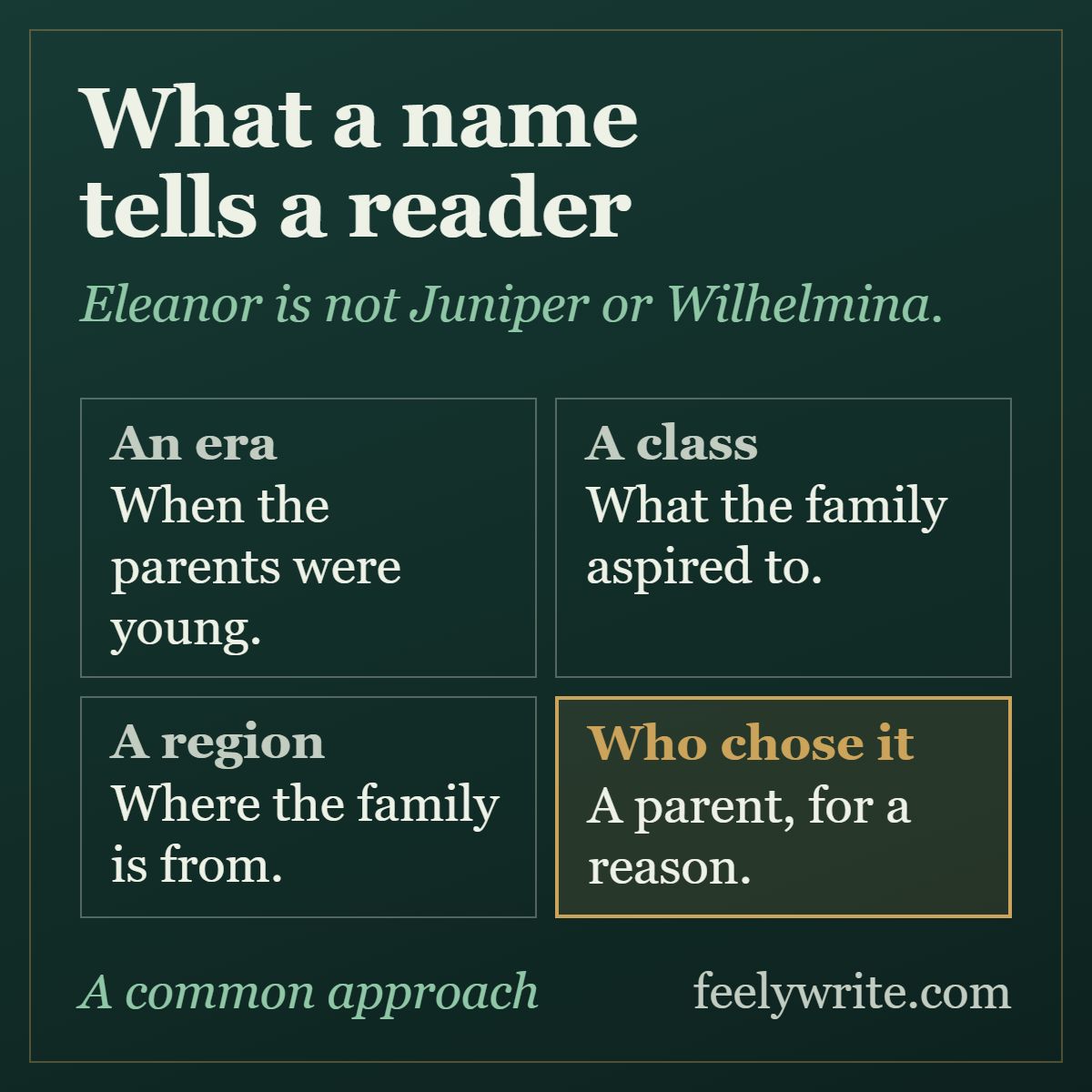
Before a reader learns anything else about your character, they have read the name. It carries an era, a class, a region and often a parent who chose it for a reason. Eleanor and Juniper are not interchangeable. Neither of them is Wilhelmina, even in the same room in the same year.
That is why the meanings matter here rather than being decoration. A name means something to the people who use it, so knowing what it means tells you who would choose it. It also prevents the most common error in fiction: a character whose name belongs to a country they have never been to, for no stated reason.
How this character name generator works
The lists are grouped by culture, then split into given names and family names. Every entry is a name people genuinely have, with its meaning or origin and a short note on how it reads today: modern or old-fashioned, formal or plain, common or rare. Pick a given name from one list and a family name from the next. Then say the pair out loud.
Reroll for a fresh set whenever you like. When the lists get close but not close enough, describe the character instead: age, background, the family they come from. The generator returns ten names built around that description, each with its reasoning. That run needs a free FeelyWrite account.
Before you use a Japanese or Arabic name
Japanese names put the family name first: Tanaka Haruki. Many novels in English flip it to Haruki Tanaka. Either is fine, as long as the book picks one order and keeps it. A Japanese name can also carry different meanings depending on the kanji chosen, which is why Yuki can mean snow or happiness.
Arabic family names often tell you where a line came from. Al-Masri means the Egyptian, a place of origin carried as a name. Haddad means blacksmith, a trade that became a surname. Khalil is a given name that became a family name. Knowing which kind you picked tells you something about the family you are writing.
Check your cast at a glance
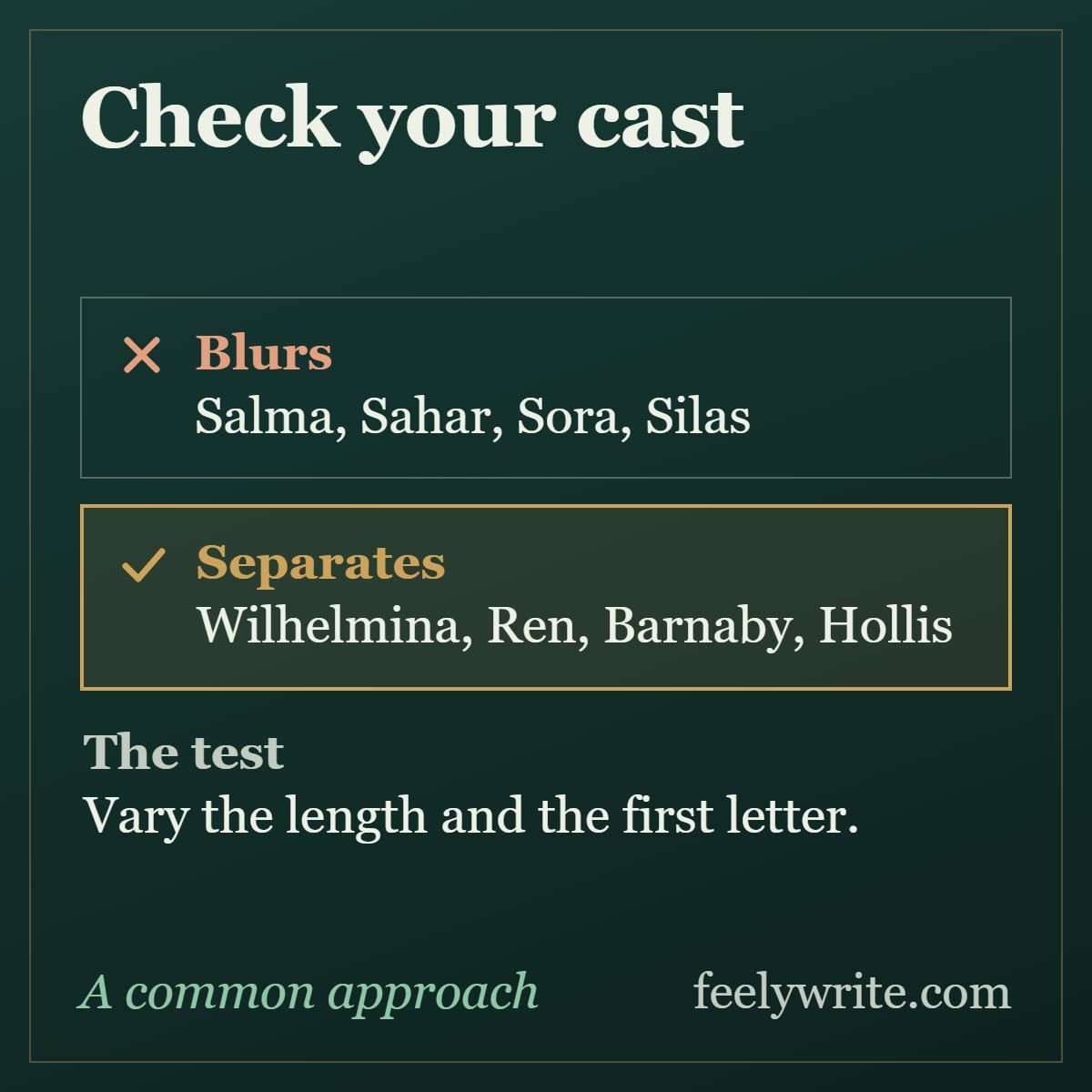
Readers keep a cast apart by the shape of each name long before they know the people. Salma, Sahar, Sora and Silas share a first letter, a length and a rhythm, so on the page they blur into one person. Wilhelmina, Ren, Barnaby and Hollis separate at a glance, because no two start with the same letter or run the same length.
Before the draft goes far, write your main cast on one line and say it out loud. Vary the length and the first letter. Two major characters who share an initial will cost your reader a moment every time they meet.
Give the parents a reason
Somebody chose this name before your story started. A grandmother, a saint, a hope, a compromise between two families. You do not have to put it on the page, but knowing it stops the name feeling arbitrary.
Vary the shapes, not just the letters
Readers lose track when several characters share a rhythm. Two syllables ending in a vowel, four times over, blurs on the page. Mix a long formal name with a blunt one-syllable name and the cast separates instantly.
Check the era
Names date. Akiko reads older in Japan today. Juniper reads modern and American. If your character was born in 1950, choose a name that was common then, not one that is popular now.
Research before you borrow
If you are naming a character from a culture that is not yours, use a real name with a real meaning and check how it is actually used. A plausible-sounding invention is the thing readers from that culture notice first.
Common questions
- Are these real names?
- Yes. Every entry is a name people genuinely have, with its meaning or origin in the note, checked against name references. Invented names that imitate a real culture are useless for research and disrespectful to the people whose names they copy.
- What order do Japanese names go in?
- In Japan the family name comes first, so Tanaka Haruki. Many English-language novels use the Western order, Haruki Tanaka. Choose one order for the whole book and keep it, including in dialogue.
- Can I mix given and family names from different groups?
- You can. Real people do. A character with a Japanese family name and a Western given name has a history. That history is worth a line somewhere in your book.
- Is the character name generator free?
- The lists are, with no account and no limit on rerolls. Building ten names from your own description needs a free account. New accounts start with 15 free credits, no card required. Each run uses one.
- How do I keep a big cast straight?
- Keep one line on each character: who they are, what they want and how they speak. FeelyWrite holds that in Story DNA, which every feature reads before it writes. When you forget a detail, Talk to your book answers from what you have actually written.
Give the name a whole person
A name is where a character starts. In FeelyWrite, Story DNA holds who they are, what they want and how they change, so a minor character in chapter two still sounds like herself in chapter thirty.
Start writing free