A paragraph rewriter for the paragraph that is not working
Paste your own prose and get ten versions that keep the meaning, the point of view and the tense while changing only the writing. Each one says what it did.
A paragraph rewriter rewords a passage while keeping its meaning. This one is built for fiction: it preserves your point of view, tense and facts, changes only the prose and says what each version altered. It runs on a free FeelyWrite account, which gives you 15 free credits at signup. One rewrite spends one.
Paragraph rewriter
Paste your paragraph
Your prose in, ten rewrites out, each naming what it changed and why.
0 / 2000
Rewriting fiction is not rewording
General paraphrasing tools are built for essays and emails. They swap words for synonyms and call it a rewrite, which is why fiction comes out of them sounding like a translation. Prose has a point of view, a distance, a tense and a rhythm. A rewrite that keeps the meaning while breaking any of those has not helped you at all.
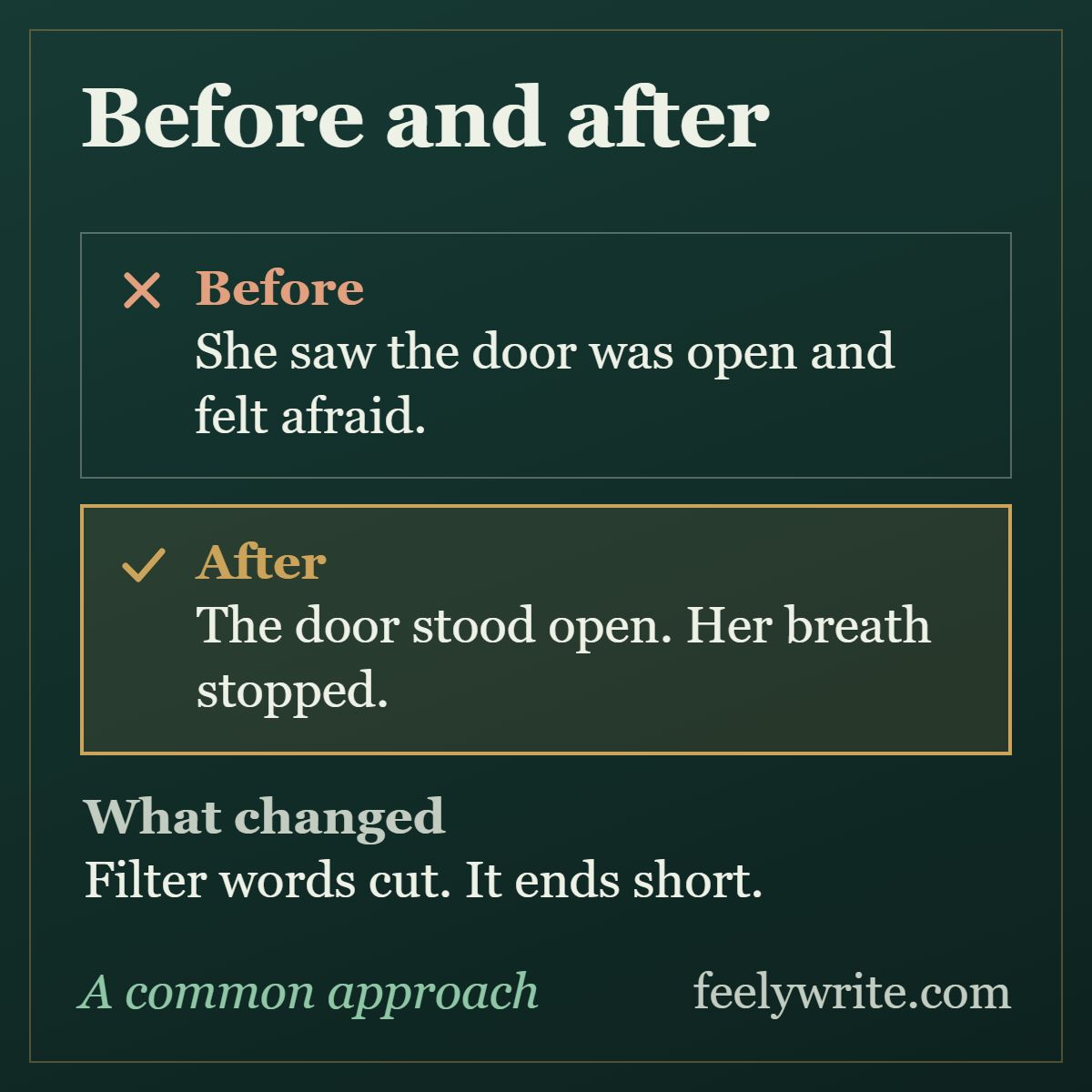
What usually needs to change is more specific than the words. A flat paragraph is often flat because it summarizes where it should dramatize, or because every sentence is the same length, or because filter words put a pane of glass between the reader and the scene. Naming the actual problem is most of the fix.
What this paragraph rewriter keeps and what it changes
Paste a paragraph of your own fiction, up to about 2,000 characters. The rewriter keeps what the paragraph says: who is present, what happens, whose head we are in and when it is happening. It changes how it is said. You get ten versions. Each one names its change, such as shorter sentences, less summary or more interior thought, so you learn what was wrong instead of only swapping text.
It works on a single sentence too. Rewriting one line at a time is slower, but it is the best way to rewrite a paragraph that is almost right.
Rewrite inside your manuscript
The free tool sees one paragraph. Inside FeelyWrite, Rewrite sees the paragraphs on either side as well, so a new version does not contradict the text it sits between. You choose from six directions (rephrase, shorter, more descriptive, show rather than tell, more inner conflict, more intense) or type your own instruction, like "cut the adverbs." Alternatives appear beside your text with the changes marked. Your original stays exactly where it is until you choose. It handles a selection of up to 6,000 words.
Read it aloud before you rewrite it
Your ear finds the problem faster than your eye. Where you stumble, run out of breath or go flat is exactly where the sentence needs work. It is usually not where you assumed.
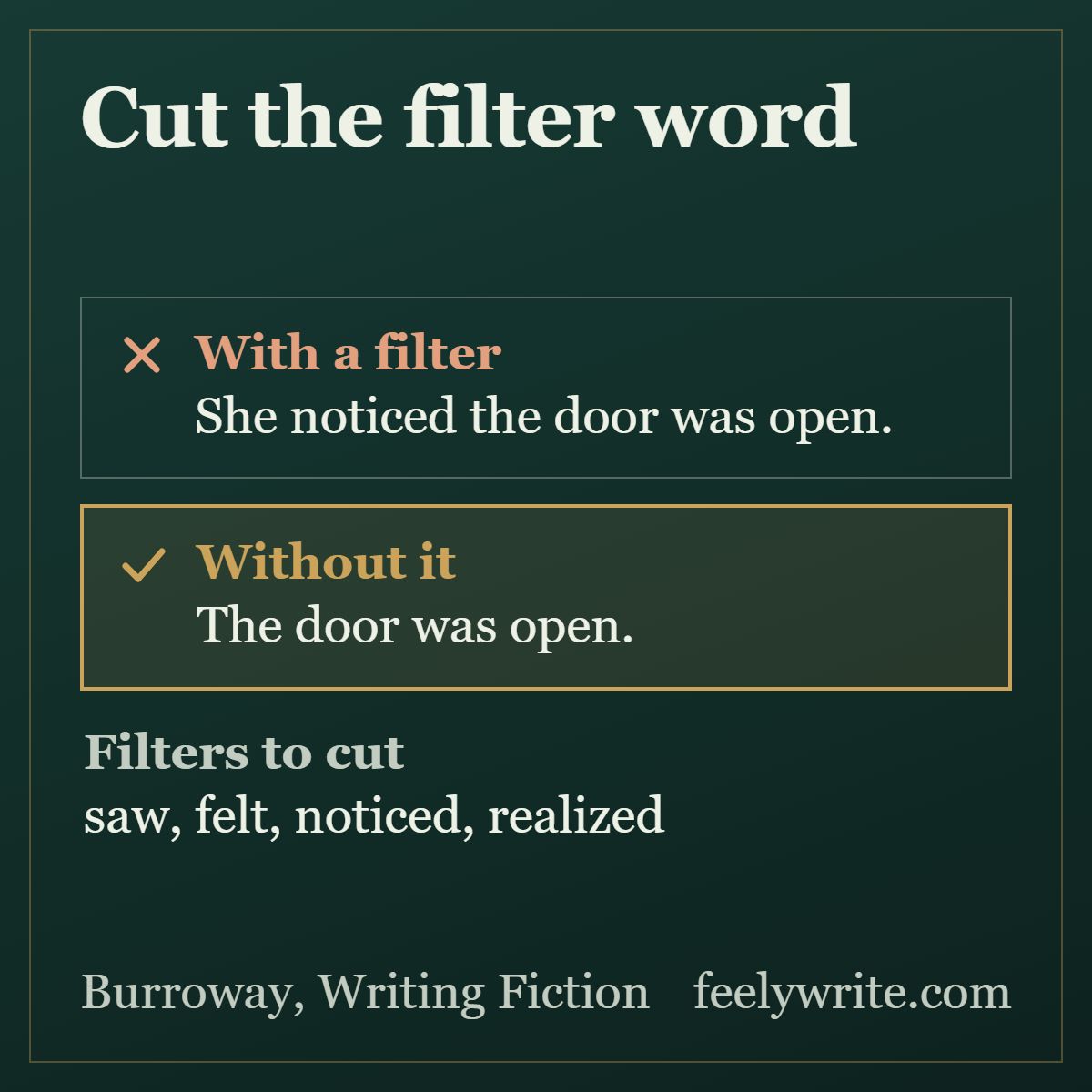
Cut the filter words first
She saw, he felt, she noticed, he realized. Janet Burroway named these filters in her textbook Writing Fiction. Removing them puts the reader inside the character instead of watching them perceive. Often that fixes a flat paragraph with no other change.
Vary sentence length on purpose
Three medium sentences in a row flatten any paragraph. Put a short one after a long one when you want the reader to stop. The rhythm will do work no vocabulary change can.
Common questions
- Will it change my meaning?
- It is instructed not to: the facts, the point of view and the tense are kept. Only the prose changes. Always read the version you pick, because no tool is perfect at this.
- Is the paragraph rewriter free?
- A free account comes with 15 free credits. One rewrite of ten versions spends one. No card is needed to create the account.
- How long a passage can I paste?
- Up to about 2,000 characters here, which is roughly a long paragraph. Inside FeelyWrite, the Rewrite feature handles selections of up to 6,000 words.
- Can I use it as a sentence rewriter?
- Yes. Paste one sentence and you get ten versions of that sentence. Short inputs work best when you say what bothers you about the line.
- Is it a grammar checker?
- No. Grammar tools fix correctness. This is for prose that is already correct and still not working: pace, distance, restraint, intensity.
- Will a rewrite make my prose sound generic?
- It can, if you accept versions without reading them. Use the ten as options to react to, not replacements. The best result is usually your own sentence, fixed after you saw what the rewrites changed.
Rewrite inside your manuscript
In FeelyWrite the same idea works on a selection of up to 6,000 words, with the passages around it and your Story DNA in view. So the new version still sounds like the chapter it lives in.
Start writing free