A villain name generator that starts with the kind of villain
A mastermind and a brute do not get the same kind of name. These are grouped by archetype, because that is the choice you are actually making.
A villain name generator suggests names for antagonists. This one groups villain and antagonist names by archetype: masterminds, brutes, corrupt officials, monsters, fallen heroes and cold professionals. The kind of villain decides the kind of name. The lists are free with no account, while names built from your description use a free account that starts with 15 free credits.
Villain name generator
Villain names
- Thackthe sound of the job
- The Hanged Judgestill passing sentence
- The Tailormeasures you once
- Gruthnobody asks him to repeat it
- Marrowjawthe only honest name on this list
- Edmund Claydeliberately forgettable; that is the point
- Commissioner Pellsigns off on everything
- Brother Tomaskept the vows, lost the faith
- Auguste Vaneold money, no visible occupation
- Inspector Rhodesinvestigates himself, finds nothing
- The Oathbreakerhe would say he kept a better one
- Mr. Alderno first name is ever offered
- Assessor Krelldecides what your land is worth
- Idrissa Kanesaved a city, then billed it
- Havelock Greya civil servant with a private army
- The Harbormasterdecides which cargo is never inspected
- Lord Protector Ashbyprotection became ownership
- The Cartographerknows where everything is
- Envoy Casimirdiplomatic immunity, used fully
- The Widowed Generalthe war ended; she did not
- The Underwriterdecides whose risk is acceptable
- Judge Hallowaysentencing varies by surname
- Kasimir Nowakbetrayed first, never stopped
- The Provostacademic authority turned carceral
Or describe your antagonist
Archetype and tone in, ten names out, each with a reason it suits them.
0 / 2000
The frightening names are the ordinary ones
Fiction keeps reaching for names with a Z and an apostrophe. They rarely land. The names that actually unsettle a reader are ordinary ones attached to people who are not ordinary: Edmund Clay, Mr. Alder, Dr. Ilse Brandt. The menace is that they would look normal on a letterhead. Norman Bates and Annie Wilkes work the same way.
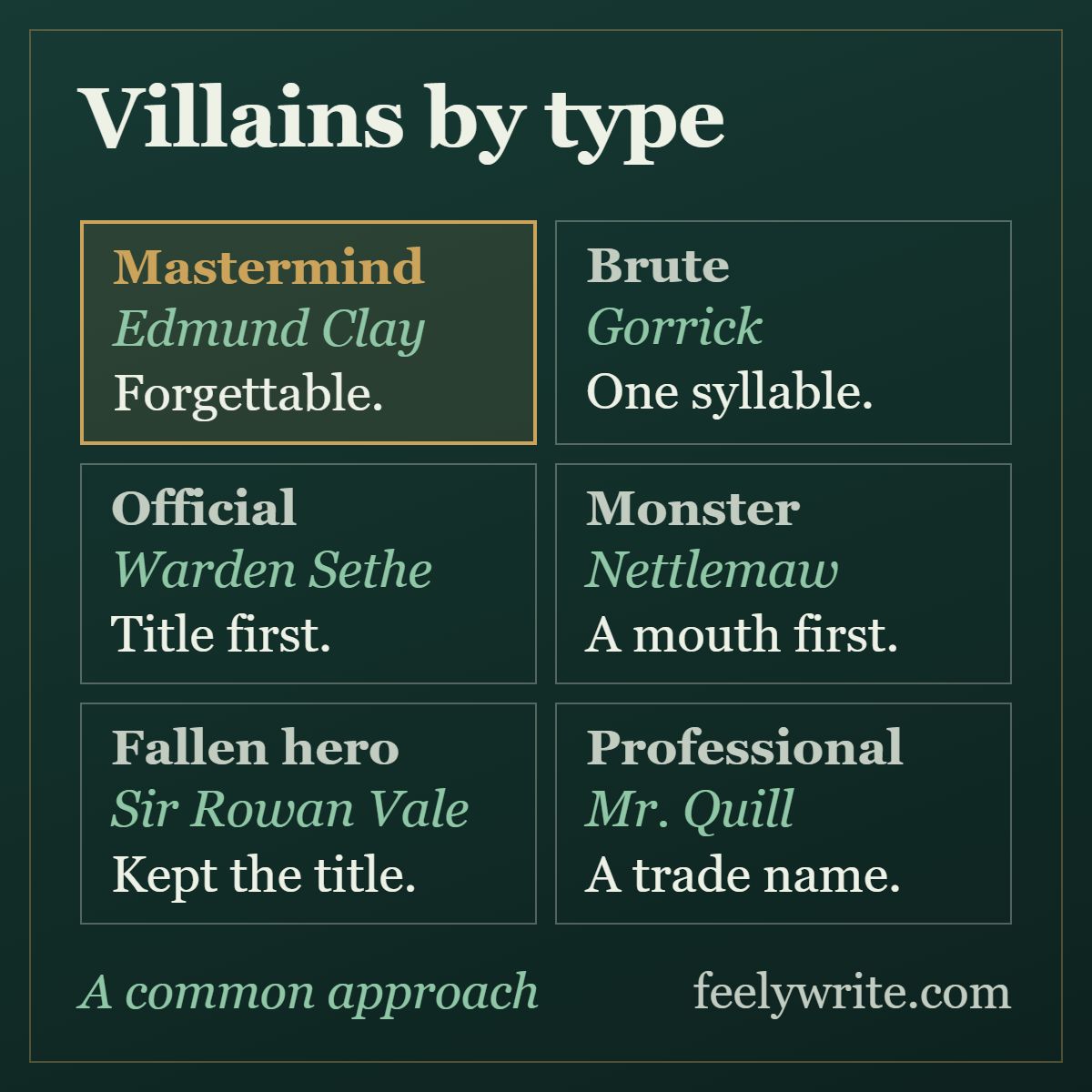
The archetype decides the register. A brute wants a name that arrives before he does, one heavy syllable that sounds like the job. A mastermind wants a name nobody would remember. A corrupt official barely needs a name at all, because the title is the weapon and everyone already knows what it can do.
Villain names and antagonist names are not the same job
A villain is evil, or close to it. An antagonist only has to stand in the way: a rival, a parent, an official following the rules, a friend who wants the opposite thing. Antagonist names should sound like people the reader might like, because often the reader should. Save the heavy names for characters who have earned them.
How to use this villain name generator
Pick the archetype first, then read down the list. The note beside each name says what it signals, whether that is old money, a nickname that replaced the name, or a title that does the threatening. Reroll for more. If none of them fit, describe your antagonist instead: what they want, what they do and who they were before. You get ten names shaped by that description, each with a line on why it fits.
Give the villain a title instead
The Registrar, the Provost, the Harbormaster. A functional title is frightening because it implies a system that authorized the person. Systems are much harder for a protagonist to punch than individuals are.
Do not name them after their crime
A villain called Bloodreaver has already told the reader everything and left you nowhere to go. Let the reader discover what the character does. The name is where you hide it, not where you announce it.
Let someone else supply the epithet
Black Isolde and Bull Hannigan were not named that by themselves. A nickname implies a community that watched this person become what they are. That community is a source of scenes.
Search the name before you commit
A name that belongs to a famous villain in a series by another author brings that villain with it. Two minutes of searching saves a reader from picturing the wrong character. It also saves you a rename in revision.
Common questions
- What makes a good villain name?
- It suits the archetype and does not announce the crime. A mastermind should sound unremarkable. A brute should sound heavy. A corrupt official often needs a title more than a name.
- Should a villain name sound evil?
- Only if the story wants the reader to know at once. Dark-sounding names suit fairy tales and younger readers. In most adult fiction an ordinary name is more unsettling, because the reader cannot dismiss the person who carries it.
- Can I use these names in my book?
- Yes, freely. Copyright does not cover names, which the US Copyright Office groups with titles and slogans as things it will not register ([Circular 33](https://www.copyright.gov/circs/circ33.pdf)). Adjust the spelling if you want the sound to sit differently.
- Is the villain name generator free?
- Browsing and rerolling the lists is free, with no account. Generating names from your own description needs a free FeelyWrite account. It comes with 15 free credits and asks for no card.
- Should my villain have a sympathetic name?
- Often, yes. A name the reader finds ordinary or even warm makes the character harder to dismiss. That is usually what you want from an antagonist worth the book.
- How do I keep a villain consistent across a novel?
- Write down what the villain wants and what they would do if the hero never showed up. FeelyWrite keeps that in Story DNA with the rest of your cast. Every feature reads it before it writes a scene.
Give the villain a plan
A villain is only as frightening as what they want. FeelyWrite holds that want in Story DNA and drafts the scene where it collides with your hero, in your point of view and your tense, with Draft.
Start writing free